“Nothing,” she lied. “Mateo threw a tantrum.”
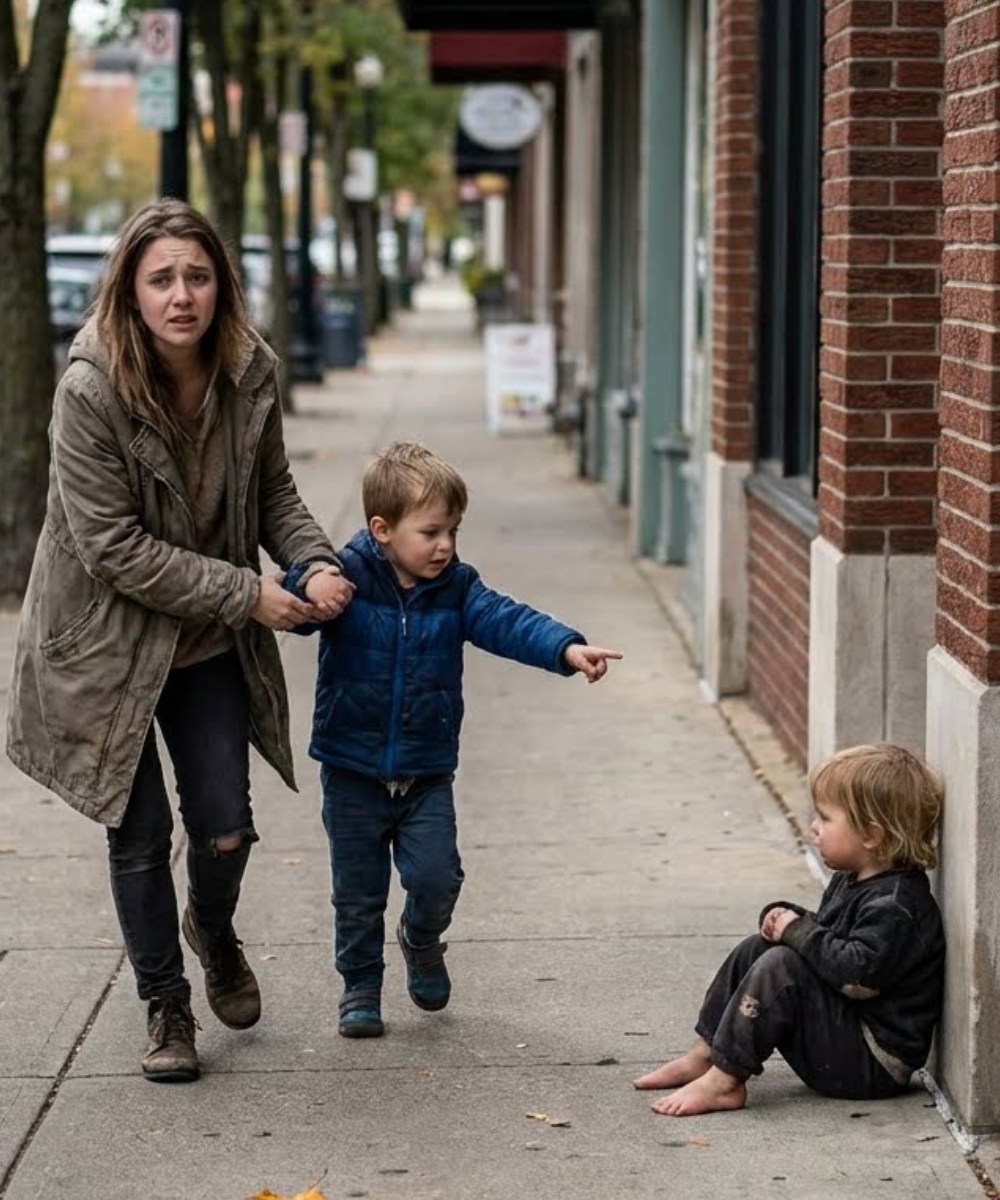
“It wasn’t a tantrum!” Mateo shouted, running to his father. “Dad! I saw my brother. He was selling candy in the plaza, and Mom wouldn’t let me stay.”
Ricardo let out a laugh that died instantly when he saw Daniela trembling.
“Champ… you don’t have any brothers.”
“Yes, I do. He looks just like me. You tell him, Mom.”
That night, when Mateo finally fell asleep, Daniela opened an old folder with medical papers. She reread everything. Nothing mentioned a multiple pregnancy. But the memories of that day were riddled with holes, like a cut film. And that emptiness—that damned emptiness—now took the shape of a barefoot boy.
The next morning, Mateo refused to eat breakfast.
“I want to see my brother,” he kept repeating.
Ricardo tried to calm him down, but Daniela couldn’t anymore. Something inside her, for the first time in years, stopped running away.
“Let’s go to the plaza,” she said.
Ricardo looked at her as if he didn’t recognize her. “Are you sure?”
“No. But I need to know.”
In the plaza, Pablo was sitting alone with a piece of stale bread. There was no sign of Aunt Consuelo.
Mateo ran out and hugged him as if he were reunited with a part of himself.
Ricardo was speechless. “My God… Daniela… you’re identical.”
Daniela nodded, feeling a mixture of fear and hope.
“Where’s Aunt Consuelo?” Mateo asked.
“She went to the hospital last night,” Pablo replied, his eyes swollen. “I don’t know when she’ll be back.”
Ricardo crouched down in front of the boy. “Are you five years old?”
“I think so. Aunt Consuelo said I was born on the day there are fireworks in the sky.”
Daniela went pale.
“Mateo was born on New Year’s Eve,” she whispered.
The world stood still for a second. Then, as if someone had pushed over a set of dominoes, everything began to fall.
They went to the hospital. After some insistence, a records clerk—Doña Guadalupe—found the birth file. Pages were missing. And on one page, barely visible, something written in pencil: “multiple pregnancy.” Erased. As if someone had wanted to erase the truth as well.
“Who could touch these files?” Daniela asked.
“Immediate family… her husband… her mother… her mother-in-law,” Doña Guadalupe replied.
Doña Esperanza’s name appeared like a shadow.
Doña Esperanza: the elegant, rigid, controlling mother-in-law. The same woman who, that day at the hospital, “helped with the paperwork” for hours while Daniela was unconscious. The same woman who always claimed to know what was “best for the family.”
Daniela felt a chill run through her veins.
That afternoon, without warning, they went to Doña Esperanza’s house. A mansion in a luxurious neighborhood, so perfect it seemed designed to hide flaws.
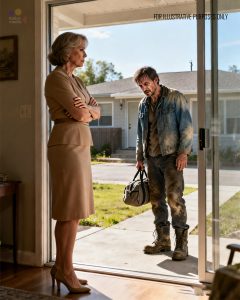
The door opened, and Doña Esperanza’s smile froze when she saw Pablo.
For a moment, her face went blank. As if she were seeing a ghost.
“Who is this boy?” she asked, her voice too high-pitched.
“Mom, we need to talk,” Ricardo said. “It’s about Mateo… and about Pablo.”
Doña Esperanza tried to deny it, but when she saw the two boys together, she paled. She leaned against the doorframe.
“Coincidences,” she murmured, without conviction.
“They were born on the same day,” Daniela said. “In the same hospital. They have the same mark. The same scar on the same finger.”
Mateo tugged at his grandmother’s skirt. “Grandma… this is my brother. Don’t you remember him?”
Doña Esperanza pushed him away abruptly, as if the word “brother” burned her.
“I don’t know what you’re talking about! That boy has nothing to do with us.”
Ricardo followed her inside. Daniela came in with the children behind her. Pablo stared at the furniture as if it were from another planet.
“Tell me the truth,” Daniela demanded. “I’m his mother.”
“You’re Mateo’s mother,” Doña Esperanza shouted. “Only Mateo’s!”
And then, the silence was broken. As if the secret could finally breathe.
Doña Esperanza slumped onto the sofa and covered her face.
“I just wanted to protect them,” she said, her voice aching.
“What about?” Ricardo asked, trembling with rage.
“The birth was complicated… Daniela lost a lot of blood… she was unconscious for hours. The doctors said there were two babies. But one… one had respiratory problems.”
Daniela felt like the ground was disappearing beneath her.
“And what did you do?” she whispered, her strength gone.
“A nurse said there was a woman… Consuelo… who could take care of him. They told me it was for the best. You were young… I thought…”
“It wasn’t your decision!” Ricardo exploded.
Pablo began to cry. Mateo hugged him urgently, as if his small body could protect him from the adults’ hatred.
“Now we’re together,” he whispered.
Daniela looked at Pablo and saw, all at once, five years of hunger, of fear, of sleepless nights. Five stolen years.
They left the mansion without looking back. In the car, Daniela promised, with a voice that was no longer fear but a vow: “We’re going to take care of you. You’ll never be alone again.”
They searched for Consuelo. They found her in the hospital, admitted for a diabetic crisis. When she saw Pablo, she wept as if her heart had been restored.
“My son… where were you?”
“With my family,” Pablo replied, and that word hurt Daniela in a strange way: because it was true… and because for five years, Pablo’s family had been that woman.
Consuelo listened to the story and, instead of getting angry, looked at Daniela with a mature sadness.
“He always said he had an identical brother in his dreams,” she murmured. “I thought it was his imagination.”
Daniela took Consuelo’s hand. “You loved him when no one else did.”
“I still love him,” Consuelo said, stroking Pablo’s hair. “It’s just that… I’m poor.”
Ricardo shook his head firmly. “Poverty doesn’t define the heart.”