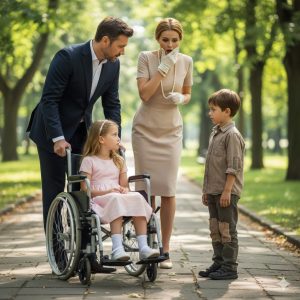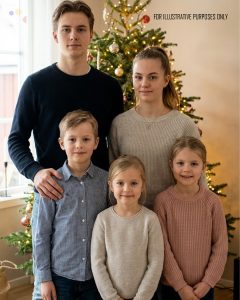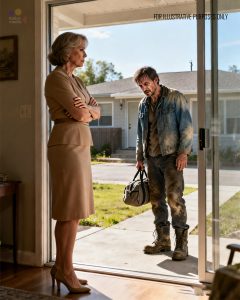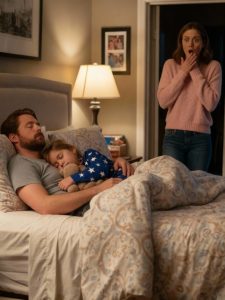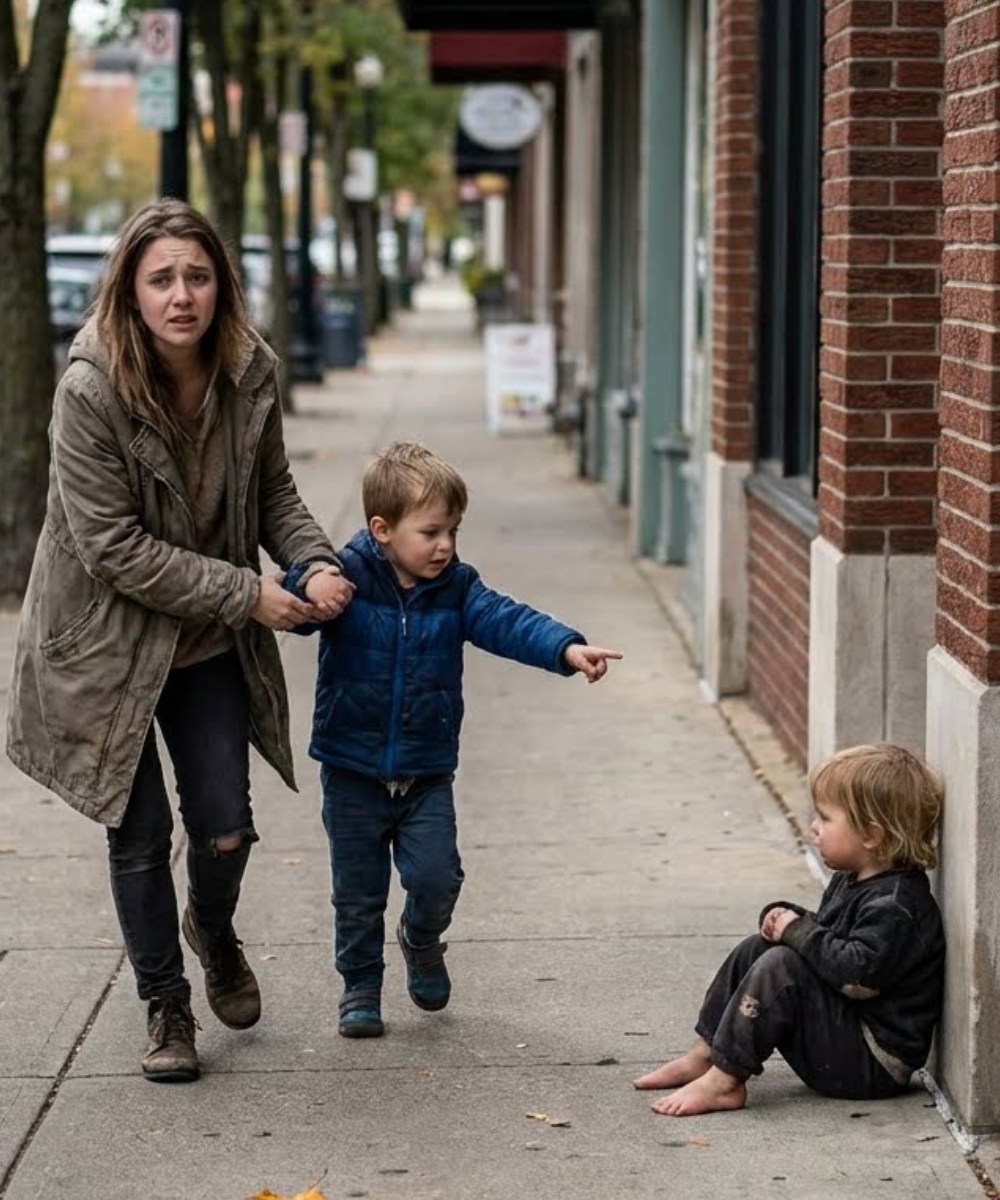
That night, the decision became a reality: Pablo and Consuelo would come with them.
It wasn’t easy. Pablo ate quickly, as if someone were going to take his plate away. He put bread in his pocket. He hid when he broke something. Once, he broke a vase and crawled under the bed, trembling.
“Now they’re going to kick me out,” he sobbed.
Daniela lay down on the floor, at his level. “No one is going to kick you out. Never. Do you hear me? You’re my son.”
“Really?” he asked fearfully. “Even if I’m bad?”
“Even if you make mistakes. Even if you yell. Even if you break things. A real family doesn’t fall apart.”
Pablo came out from under the bed and hugged her with a strength that seemed too much for a child.
And then came the other battle: Doña Esperanza.
Furious, she threatened to cut off the financial support that covered the mortgage. Daniela felt dizzy when she realized that part of her “stability” came from that controlling hand. But she looked at the children—Mateo clinging to Pablo like a happy shadow—and knew what to do.
“We’ll manage,” she said. “We’ll work harder, live in a smaller house. But we won’t abandon them again.”
And they kept their word.
They moved to a modest house with a yard and fruit trees. Consuelo started a vegetable garden as if planting were a way to heal. The children ran, laughed, and made plans for a tree house. For the first time, Pablo had a bed of his own… and yet he still preferred to sleep near Mateo, as if his body reminded him of the day they had been separated.
In time, Doña Esperanza appeared at the new house. She looked different: less haughty, more human. She knelt in the dirt beside Consuelo to plant tomatoes. And when Pablo, with the maturity of a wounded child, looked her in the eyes, Doña Esperanza broke down.
“Can you forgive me?” he asked, his voice trembling.
Pablo thought, seriously, like someone who had already learned to survive.
“Aunt Consuelo says that if someone is truly sorry… they can be forgiven,” he said. “But… now you’re going to love me too.”
Doña Esperanza wept as if she finally understood the magnitude of her mistake. “I’m going to love you very much. And my two grandchildren.”
That night, they ate pizza sitting on the floor because they hadn’t yet set the table. Pablo took a slow bite, savoring it as if it were something sacred.
“It’s the best pizza of my life,” he said.
“Why?” Doña Esperanza asked.
“Because it’s the first time I’ve eaten pizza with my whole family together.”
There was a silence filled with tears. Not of sadness… but of that good kind of pain that comes when something broken begins to mend.
Little by little, Pablo stopped saving food. He began to laugh like a child, not like a small adult. At school, the teachers said the twins complemented each other: one taught focus, the other taught play. And Consuelo, who could barely read, enrolled in classes so she could help with homework.
One day, a couple heard the story and asked for guidance on adopting an older girl. Then another. Then another. Consuelo, without any formal qualifications, began talking to families about trauma, patience, and unconditional love. And without realizing it, that modest house became a beacon of light.
“Do you realize?” Ricardo said to Daniela one night, looking at Mateo and Pablo asleep. “What began as a horrible secret… is now creating something good.”
Daniela stroked her sons’ hair, both of theirs.
“It doesn’t erase the past,” she whispered. “But the future… the future can be different.”
Years later, when someone asked Mateo how he knew Pablo existed, he answered with the simplicity of a child who sees without question:
“Because I felt him here,” and he touched his chest. “The heart knows when someone is missing.”
And in that family—imperfect, strange to some, immense to all who fit within its love—they learned the same thing: that blood unites, yes, but love sustains; that money helps, but it doesn’t save; and that sometimes, life separates without asking permission… but love, sooner or later, finds a way to reunite what was born to be together.